Qwen 3.6 27B: the local AI model that finally makes sense
Qwen 3.6 27B: the local AI model that finally makes sense
In June, 2026, Alibaba's Qwen team released Qwen 3.6, and within hours it hit the top of Hacker News with over 800 points. Not because of a flashy demo or a billion-dollar announcement, but because developers tried it on their own machines and found something rare: a local model that works for real coding tasks.
I've been disappointed by local models before. Most either choke on anything beyond simple autocomplete, or they need hardware that costs more than a used car. Qwen 3.6 27B is different. It's the first local model I've used that feels like actual general intelligence, not a parlor trick.
Two models, one clear winner
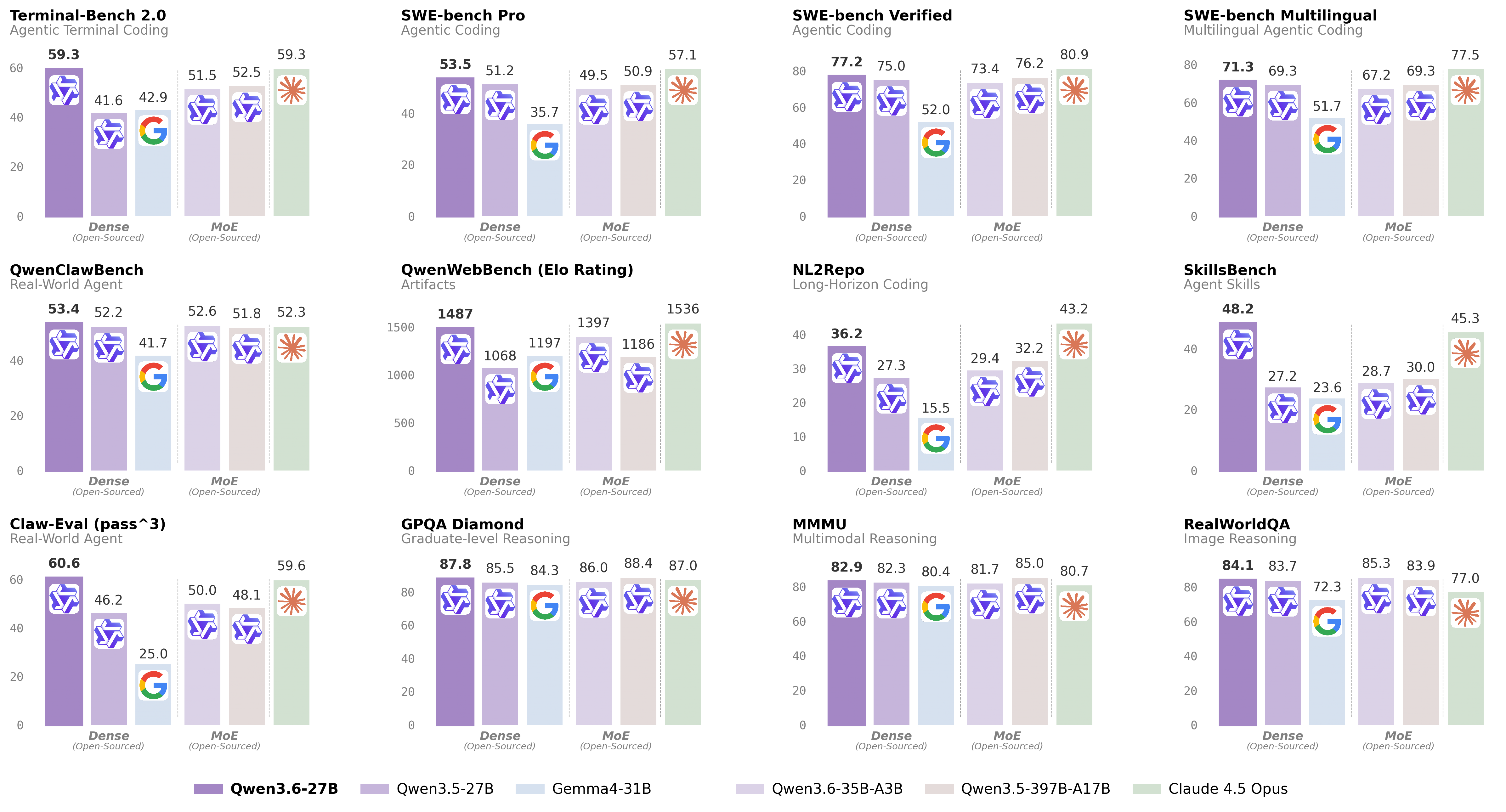
Qwen 3.6 comes in two flavors. There's Qwen 3.6 35B A3B, a mixture-of-experts model that only activates 3 billion parameters per token. It's fast. Then there's Qwen 3.6 27B, a dense model that uses all 27 billion parameters for every token. It's slower, but noticeably smarter.
Piotr Migdał, who runs AI agent evaluation at Qesma, tested both extensively. His recommendation is the 27B dense model. The 35B A3B variant is quicker but cuts corners. In one test, it ignored instructions to create a proper Node package and dumped everything into a single index.html file. The 27B model followed the prompt correctly on the first try.
What it can do
Forget the benchmark numbers for a second. Here's what matters in practice.
Migdał asked Qwen 3.6 27B to build a hexagonal minesweeper game using pnpm, a Node package manager. It worked on the first attempt, with proper project structure. He also tested it on a landing page for a candle shop, a task that required design sense and working code. The result was not going to win any awards, but it was functional, reactive, and came from a single short prompt.
A year ago, these tasks needed GPT-4.5, which cost serious money and required an internet connection. Now a 27B parameter model running on a laptop can handle them.
Running it on your own hardware
Getting Qwen 3.6 27B running locally takes about five minutes if you have a decent GPU. The recommended path uses llama.cpp, the open source inference engine, with GGUF quantized models from Hugging Face.
The specific model file to grab is unsloth/Qwen3.6-27B-MTP-GGUF:Q8_0. This is an 8-bit quantization that keeps most of the quality while cutting the model size roughly in half compared to the default BF16 precision. It also includes multi-token prediction support, which speeds up generation.
The command looks like this:
llama-server -hf unsloth/Qwen3.6-27B-MTP-GGUF:Q8_0 --spec-type draft-mtp -ngl 999 -fa on -c 65536 --port 8080
A few flags worth knowing. The -ngl 999 puts all model layers on the GPU. Flash attention (-fa on) helps with speed. The context window is set to 64k tokens here, though the model natively supports up to 256k. Once it's running, you open http://127.0.0.1:8080 in a browser and start chatting.
For coding, the same server works with agent tools like OpenCode, Pi, or Hermes. You point the agent at the local endpoint and it behaves like any other AI coding assistant, except the data never leaves your machine.
The tradeoffs
Running a 27B model at 8-bit quantization takes about 28 GB of VRAM. That means an NVIDIA RTX 3090 or 4090, or a Mac with unified memory. Migdał's thermal camera photo of his laptop is not a joke. The machine gets hot because it's working hard.
The 35B A3B MoE variant is lighter on hardware but dumber on complex tasks. If you have the VRAM, the 27B dense model is the better choice. If you don't, the 35B model still handles simpler coding jobs fine.
There's also the question of whether local models make sense for your workflow. If you're working with proprietary code, the privacy argument is strong. If you need the absolute best model available, cloud APIs still win. But for developers who want a capable coding assistant that runs offline and costs nothing per token, Qwen 3.6 27B is the first model that feels like a real option.
Why this matters for AI development
Qwen 3.6 is not just another model release. It's proof that the gap between cloud and local AI is shrinking fast. A 27B parameter model, running on consumer hardware, can handle tasks that required frontier models six months ago.
The Qwen team has 90,000 followers on Hugging Face and the model already has over 1,800 likes. The Apache 2.0 license means anyone can use it commercially, no permission needed. For teams building AI-powered tools, this changes the calculus. You can run inference locally, keep your data private, and pay only for electricity.
We've been tracking the local model space for a while, and Qwen 3.6 27B is the first one I'd recommend to a developer for daily use. Not as a toy, not as a backup, but as a primary coding tool. That's a shift.
If you have the hardware, try it this weekend. Grab the Q8_0 quantization from Hugging Face, fire up llama.cpp, and give it a real task from your backlog. You might be surprised.